Vitamin D
What is vitamin D?
Contrary to its name, it is not actually a vitamin, but a fat-soluble prohormone. In the liver and kidneys, it is converted into the active hormone form calcitriol. This plays a crucial role in bone metabolism, muscle function, immune system and much more.
Species:
- Vitamin D2 (ergocalciferol): plant-based, including in mushrooms and fungi.
- Vitamin D3 (cholecalciferol): animal, is produced in the skin under the influence of sunlight. More potent and effective than D2.
How do you get it?
- Main source: sunlight on the skin.
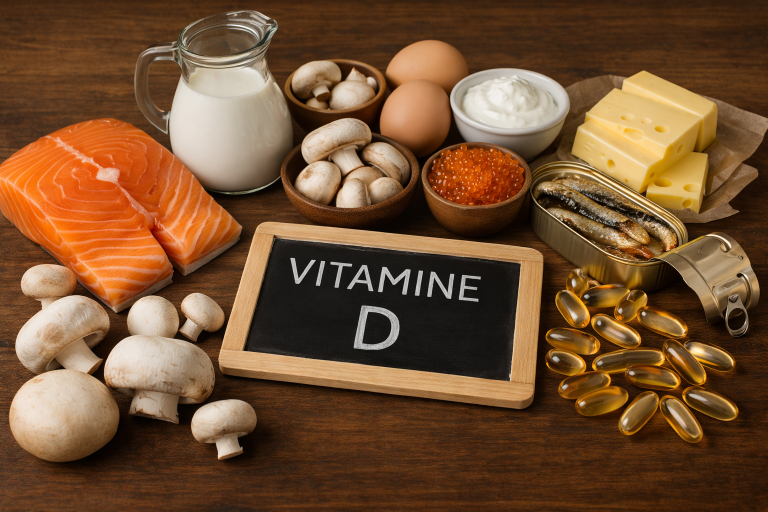
- Nutrition: mainly in fatty fish (salmon, mackerel, eel), eggs, meat.
- Added: to margarine, low-fat margarine and cooking products.
👉 Supplements are recommended for young children, the elderly, people with darker skin tones, people who do not get outside much and pregnant women.
What does it do in your body?
It helps in the absorption of calcium and phosphate, which are needed for bones, teeth and muscles. In addition, it supports the immune system, brain function and even the regulation of cell division.
Bone metabolism
- Stimulates absorption of calcium from the intestine.
- Along with calcium, provides strong bones and teeth.
- Reduces risk of bone fractures in the elderly.
Muscle function
- Supports muscle strength and balance.
- Deficiency can lead to muscle weakness and increased risk of falls.
Immune System
- Plays a role in the production of antimicrobial proteins.
- Helps fight bacteria and viruses.
Pancreas & insulin resistance
- Potential role in reducing risk of type 1 and type 2 diabetes.
- Lower levels are often seen in people with elevated blood sugars.
Brain Function
- Low status is associated with cognitive decline and depression.
- Plays a role in the production of serotonin.
Cell differentiation & cancer
- Inhibits inflammatory processes.
- Possibly protective against colon, breast and prostate cancer.
How much do you need per day?
| Group |
Recommended amount (µg/day). |
| Children 0-3 years |
10 |
| Adults up to age 70 |
10 |
| 70+ |
20 |
| Pregnant women |
10 |
Deficit:
Possible symptoms of deficiency:
- Bone osteoporosis, rickets in children
- Muscle weakness and muscle cramps
- Increased risk of falls and broken bones
- Reduced resistance
- Feelings of gloom or depression
Too much:
An excess can result from overdosing on supplements.
Symptoms of overdose:
- Headache, nausea, vomiting
- Reduced appetite
- Kidney damage (due to elevated calcium levels)
Vitamin D | Nutrition Center
Spiritual meaning ✨
It is often associated with the solar plexus chakra (Manipura) 🌞. It symbolizes life energy, inner strength and vitality. Just as the sun helps the body make vitamin D, it also nourishes the soul with warmth, confidence and zest for life.


 English
  Dutch
Dutch