Vitamin B6 (Pyridoxine)
Vitamin B6 (pyridoxine) is a water-soluble vitamin. It plays an important role in metabolism, especially in breaking down and building amino acids (the building blocks of proteins). Vitamin B6 also regulates the action of certain hormones and is needed for growth, blood production, a properly functioning immune system and healthy nerves.
What is vitamin B6 in?
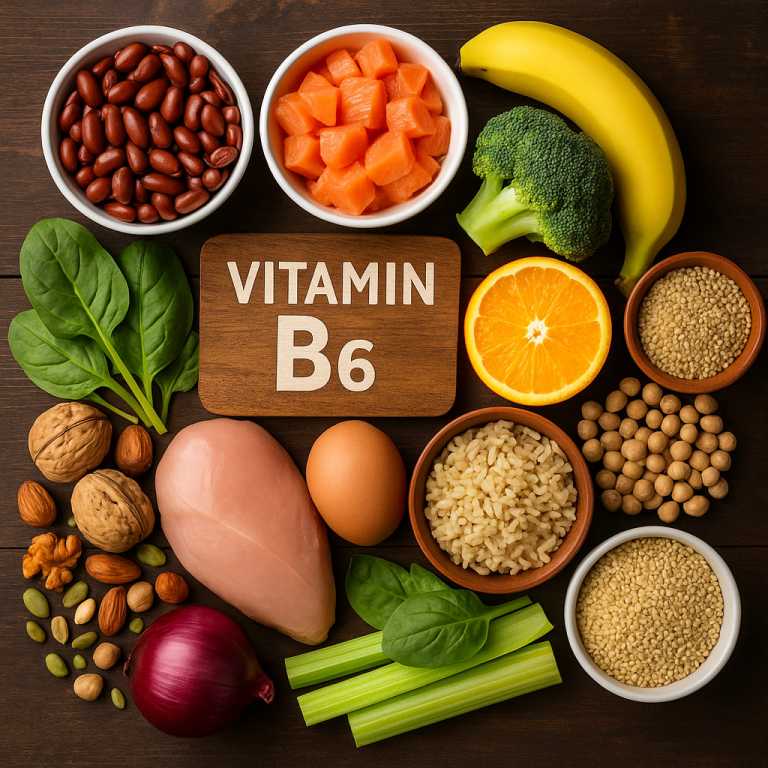
Vitamin B6 is found in many foods. Major sources are:
- Meat, eggs and fish
- Notes
- Bread and cereal products
- Legumes
- Vegetables
- Milk and milk products, such as cheese
Absorption of vitamin B6
All forms of vitamin B6 (pyridoxine, pyridoxal and pyridoxamine) are absorbed in the intestines and converted to pyridoxal phosphate in the liver. This is the active form used by the body.
- From food, your body absorbs about 75% of vitamin B6.
- From supplements, this can be as high as 95%.
Functions of vitamin B6
- Important for the metabolism of amino acids (proteins)
- Regulates the action of certain hormones
- Necessary for growth
- Involved in the production of blood
- Contributes to the proper functioning of the immune system
- Supports healthy nervous system function
How much vitamin B6 do you need per day?
The recommended daily allowance (RDA) for men and women ages 14 and older is 1.5 mg per day.
Deficiency of vitamin B6
Deficiency is rare in the Netherlands. With a long-term deficiency, symptoms such as:
- Anemia
- Nerve disorders
- Reduced resistance
In newborns, severe deficiency can lead to convulsions.
Too much vitamin B6
An excess can be harmful. Prolonged high intake (via supplements) can lead to:
- Nerve damage in arms and legs (peripheral neuropathy)
- Numbness, tingling or pain in hands and feet
You cannot overdose from normal food; you can only do so through supplements.
Acceptable upper limit (EFSA).
| Age |
Acceptable upper limit B6 (mg/day). |
| 1-3 years |
3,2 |
| 4-6 years |
4,5 |
| 7-10 years |
6,1 |
| 11-14 years |
8,6 |
| 15-17 years |
10,7 |
| 18 years and older |
12 |
Vitamin B6 | Nutrition Center


 English
  Dutch
Dutch