What is magnesium?
Magnesium is one of the most important minerals for our body. It plays a role in more than 600 processes and is indispensable for our health. Your body cannot make its own minerals, so you must get them through food.
The body contains about 21 to 28 grams of magnesium: 60% is in bones and teeth, 20% in muscles, 20% in soft tissues and liver, and less than 1% in the blood. Insufficient intake can lead to health problems and increases the risk of osteoporosis, type 2 diabetes and cardiovascular disease, among others.
Magnesium and energy (ATP)
Magnesium is essential in the energy supply of the cell. More than 300 enzymes require magnesium. ATP (adenosine triphosphate) - the energy carrier in cells - can only function in the presence of magnesium. Without magnesium, ATP cannot release energy for: cell growth and repair, hormone production and digestive enzymes.
What is magnesium good for?
Magnesium supports:
- Bone formation and bone health
- Muscle functioning and relaxation
- Conduction of nerve impulses
- Energy production in cells
- Healthy blood pressure and heart rhythm
- State of mind and stress reduction
Magnesium calms nerve cells, while calcium stimulates.
Forms of magnesium
Not every form of magnesium is absorbed equally well.
Organically bound magnesium (highly absorbable):
- Magnesium bisglycinate
- Magnesium malate
- Magnesium citrate
- Magnesium taurate
- Magnesium ascorbate
Inorganically bound magnesium (less absorbable):
- Magnesium carbonate
- Magnesium sulfate
- Magnesium chloride
- Magnesium hydroxide
- Magnesium oxide
Best absorption: Magnesium bisglycinate, because it is linked to glycine and is therefore well absorbed even in the brain.
Synergy and absorption
Organic compounds such as bisglycinate, malate and citrate are absorbed much better than inorganic compounds. Magnesium bisglycinate passes the intestinal mucosa intact and only then is split. This makes absorption fast and independent of stomach acid. Vitamin B6, glycine and taurine work synergistically and enhance the effect.
Magnesium in food
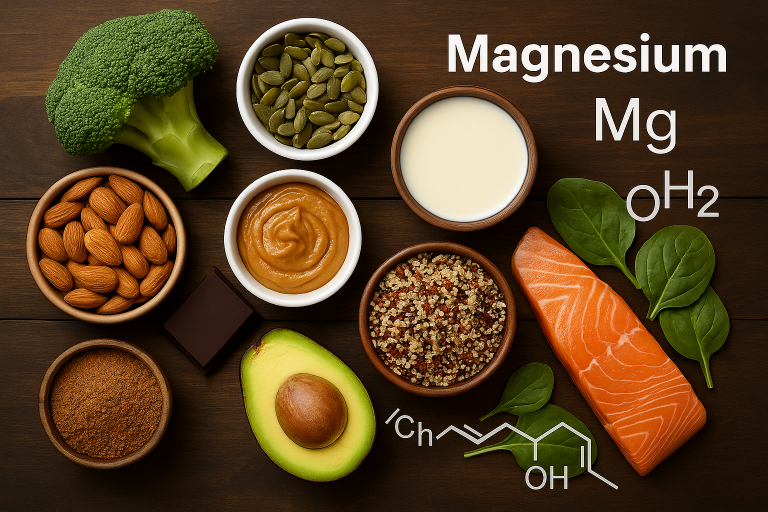
Good sources of magnesium are: whole grain breads and cereals, green leafy vegetables (spinach, chard), nuts and seeds, legumes, dark chocolate, spirulina and chlorella. Mineral water can also contribute to magnesium intake, depending on its hardness.
Magnesium deficiency
A deficiency can develop insidiously and often produces nonspecific symptoms.
Possible symptoms:
- Fatigue, lethargy
- Muscle cramps or muscle pain
- Restless legs
- Headache or migraine
- Nervousness, anxiety or depressive feelings
- Sleep problems
- Cardiac arrhythmias
Risk factors for deficiency
Factors driving a deficit:
- Foods rich in refined products
- Stress and high alcohol consumption
- Intestinal problems (Crohn's disease, celiac disease, diarrhea)
- Old age
- Vitamin D deficiency
- Medication use (such as diuretics)
Too much magnesium
An excess is almost always caused by supplements, not by food. Possible side effects include diarrhea and gastrointestinal upset. The safe upper limit from supplements is an additional 250 mg per day.
Daily requirement
Men: 350 mg
Women: 300 mg
During pregnancy and lactation: higher
Many experts recommend 500-600 mg per day, especially with a high calcium intake.
Spiritual significance of magnesium
Magnesium is known as the mineral of relaxation and balance. It helps release tension, find inner peace and promotes clarity and intuition. In spiritual teachings, magnesium is often linked to the heart chakra: peace, trust and balance in relationships.




 English
  Dutch
Dutch