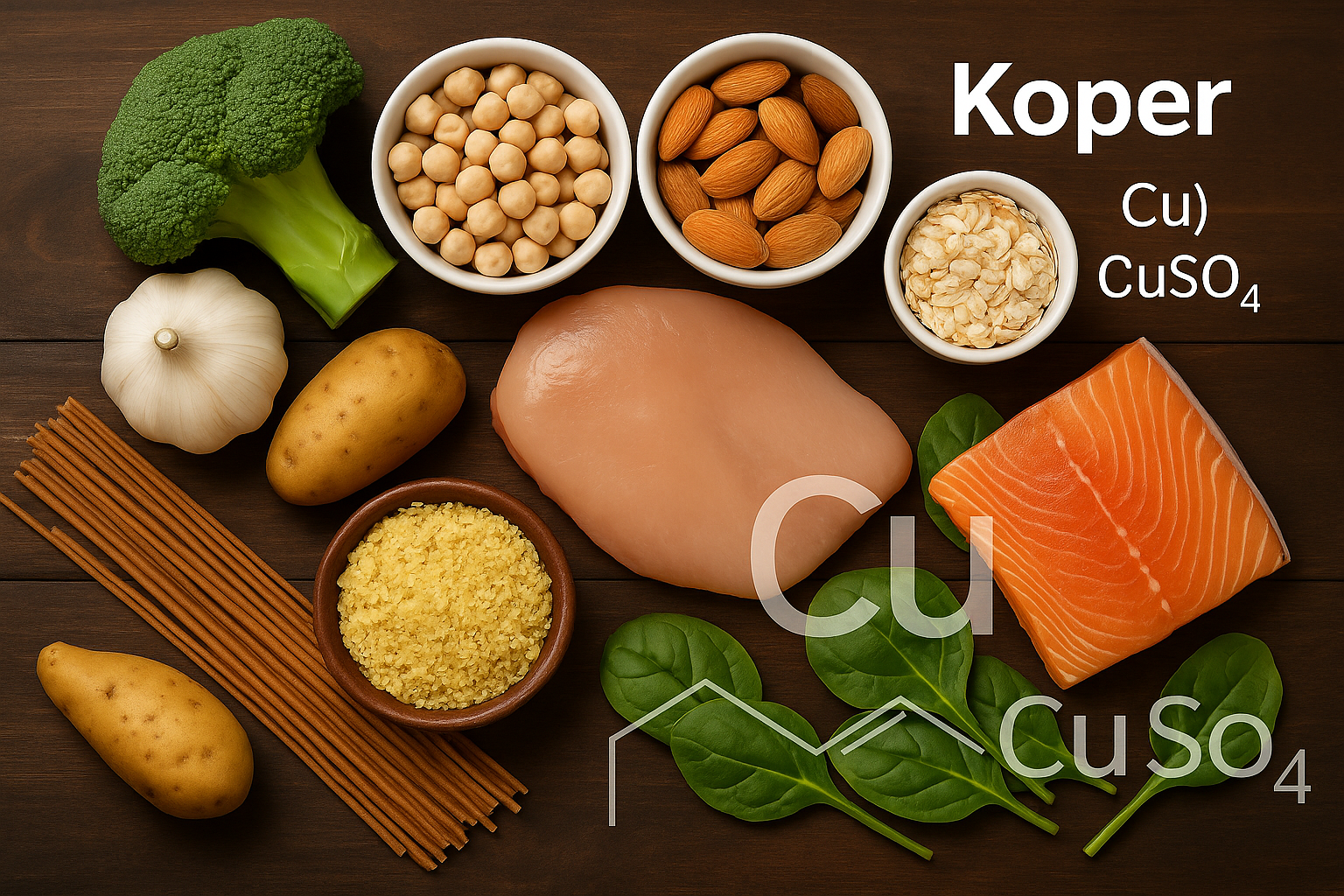
Copper: 7 powerful benefits for energy and resistance
What is copper? Copper is a trace element: a mineral of which our body needs only a very small amount. Yet it is indispensable for our health. The body cannot produce copper itself, ...
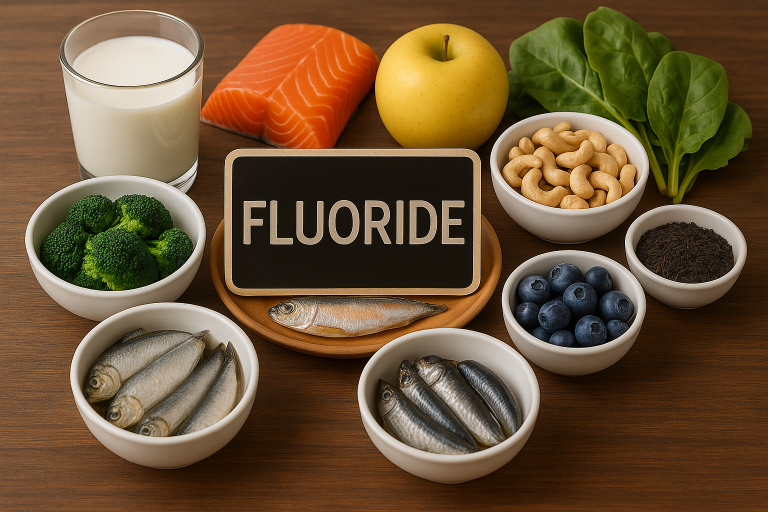
Fluoride is a trace element and belongs to the group of halogens. It does not occur freely in nature, but is usually bound to other substances (fluoride salts).
In our bodies, fluoride is mostly absorbed through food or dental products. Naturally, fluoride is found in:
However, there are only small amounts in food, insufficient to protect against tooth decay. Therefore, fluoride is often added artificially, for example in toothpaste and some mouthwashes.
In the 1960s, fluoride was even added to drinking water to prevent tooth decay (caries). This led to a decrease in the number of cavities, but also to social unrest. Eventually, the Supreme Court (1973) decided that drinking water fluoridation was not allowed in the Netherlands.
Today, you find fluoride mostly in toothpastes (usually sodium fluoride or aminfluoride). However, research shows that the protective layer in the enamel created by fluoride is extremely thin (only 6 nanometers). The question is whether this is really effective against caries.
Yet, unfortunately, fluoride is still promoted as a necessary product that is healthy for the body. However, fluoride is not a drug, but a toxic substance that affects collagen - an important connective tissue protein in teeth, bones, skin and tendons.
Key facts:
Studies have shown that fluoride can lead to a variety of health problems, including:
Fluoride disrupts enzyme processes in the body and can affect thyroid function. It accumulates in bones and soft tissue, putting increasing strain on the body.
In spiritual traditions, fluoride is often seen as a blockage to the third eye (sixth chakra). It is believed that excess fluoride (via toothpaste or drinking water) can weaken intuition and spiritual perception.
Therefore, in spiritual circles, it is advised to:
Healthy foods and herbs | Fluoride
© All rights reserved | With ♡ created by Webaware Websites
Disclaimer | General conditions | Privacy Statement |

 English
  Dutch
Dutch