1. What is Zinc?
Zinc is a mineral indispensable to the human body. It does not occur in large quantities, but it is involved in hundreds of enzymatic processes. All cells need zinc. It is especially important for:
- the building of proteins, cells and tissues
- proper functioning of the immune system
- the production of DNA and enzymes
Because our bodies cannot store zinc, it is necessary to get enough zinc daily through food or possibly a supplement.
2. What is Zinc in?
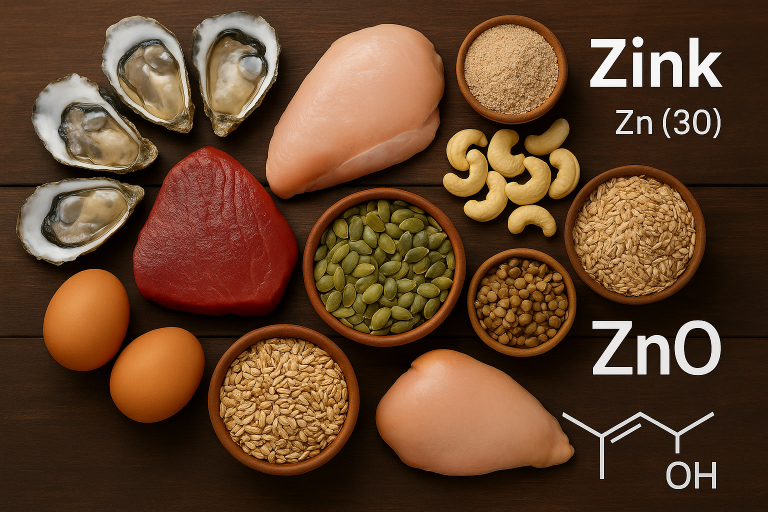
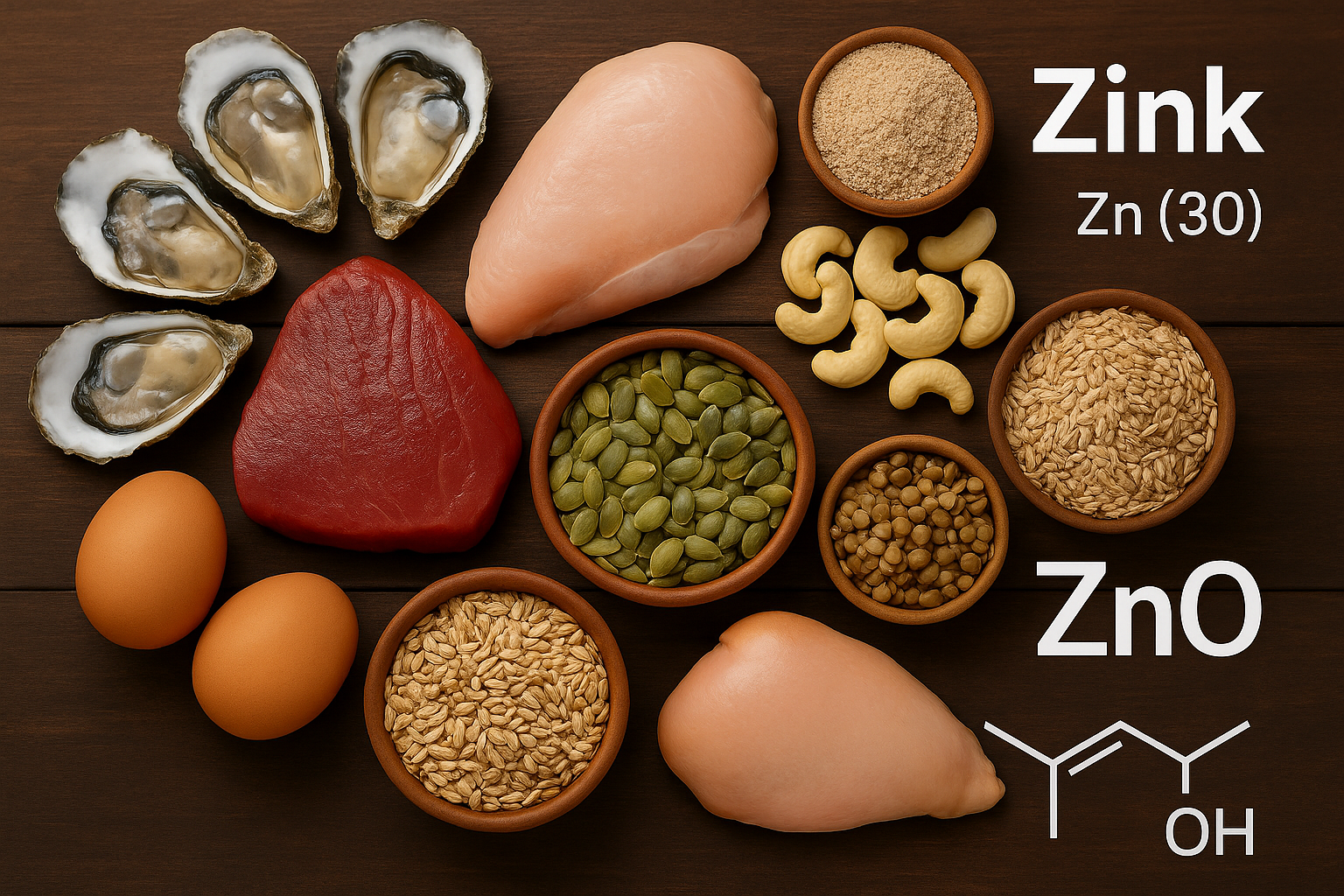
Zinc is found in both animal and plant foods. However, absorption from animal sources is better.
Rich in zinc include:
- Oysters, crab, shrimp and mussels
- Beef, pork, lamb, turkey and chicken
- Dairy: cheese, yogurt
- Legumes: chickpeas, lentils, beans
- Nuts and seeds: hemp seeds, pumpkin seeds, sesame seeds, cashews
- Whole grain cereals and oatmeal
- Vegetables: asparagus, spinach, mushrooms
💡 Tip: Do you eat little meat or fish? Then combine plant sources with vitamin C-rich foods to improve zinc absorption.
3. What does Zinc do for your health?
Zinc has numerous proven effects:
- Supports the immune system
- Contributes to the production of cells and tissues
- Plays a role in protein synthesis and DNA formation
- Good for skin, hair and nails
- Important for healthy bones and vision
- Helps maintain normal hormone levels (testosterone, sperm quality)
- Acts as an antioxidant
- Supports memory and concentration
4. When is a supplement with Zinc useful?
Skin & Hair: Zinc supports cell renewal and skin repair. People with skin problems often have lower zinc status.
Resistance: Zinc contributes to a strong immune system. It is often combined with selenium in supplements.
Stress and energy: Zinc supports the nervous system and helps the body cope better with stress.
5. Deficiency of Zinc
In the Netherlands, severe deficiency is rare, but low intake can lead to:
- Hair loss
- Diarrhea and nausea
- Night blindness
- Growth retardation
- Skin problems and wound healing gone bad
- Decreased taste and smell
- Delay in sex development
- Reduced resistance
6. Too much Zinc
The safe upper limit for adults is 25 mg per day via food and supplements. A higher dose may be used briefly, such as for colds.
Too much zinc can lead to:
- Nausea and upset stomach
- Disruption of copper status (zinc and copper compete in uptake)
- Reduced immunity at chronically high intakes
7. The relationship between Zinc and Copper
Zinc and copper are absorbed through the same transport routes. A long-term high zinc intake can lead to copper deficiency (and vice versa). Therefore, many supplements contain both minerals in balance.
8. Spiritual significance of Zinc ✨
Zinc is seen in spiritual tradition as a metal of balance and protection. It symbolizes:
- Grounding and stability - helps balance emotions
- Protection - sometimes associated with warding off negative energy
- Healing and regeneration - in line with its role in the body in cell renewal and repair
- Intuition and clarity - supports mental focus and inner peace
Sometimes zinc is connected in energetic work to the root chakra (safety, base) and the solar plexus chakra (personal power).
 English
  Dutch
Dutch