Vitamin B9 - Vitamin B11 (folic acid).
What is Vitamin B9 - Vitamin B11 (Folic acid)?
Folic acid is considered both vitamin B9 and vitamin B11. It is part of the vitamin B complex and performs important functions in the human body.
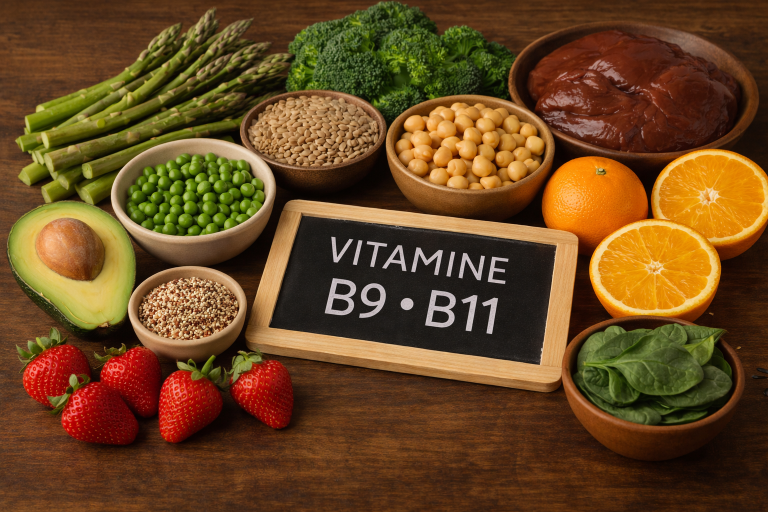
Folic acid is found in:
- Spinach
- Sprouts
- Broccoli
- Cabbage
- Asparagus
- Citrus fruits
- Yeast
- Liver and kidneys
What does folic acid do in your body?
Folic acid is involved in, among other things:
- Creation of red and white blood cells
- Protein metabolism
- Support of the immune system
- Function of the nervous system
- Cell division
How much folic acid do you need per day?
| Group |
Recommended daily allowance |
| Adults |
300 mcg per day |
| Pregnant women |
400 mcg per day |
The Health Council gives these values as guidelines. In practice, folic acid can also be used therapeutically in higher doses (400 - 5000 mcg per day), for example in:
- Homocysteine levels that are too high
- Neuropsychological disorders
- Megaloblastic anemia (certain form of anemia)
- Intestinal inflammatory diseases
- Alzheimer's disease
💡 Important: folic acid works optimally in combination with a B complex or multivitamin because the B vitamins reinforce each other.
Symptoms of folic acid deficiency
Folate deficiency is relatively common in the West. The body has only a small supply buffer and thus depends on food.
Possible symptoms of deficiency:
- Intestinal disorders
- Fatigue
- Anemia
- Dejection
- During pregnancy: increased risk of spina bifida, harelip or cleft palate in the child
When do you have too much folic acid?
The health council has set the upper limit at 1,000 mcg per day.
Notice:
- High folic acid intake can mask a vitamin B12 deficiency on blood tests.
- Too much folic acid can reduce zinc absorption.
- Therefore, it is recommended that folic acid always be combined with vitamin B12 and a B complex.
What forms of folic acid are there?
In terms of absorbability (best first):
1. Quatrefolic 5-MTHF
2. Pteroylglutamic acid
Folic acid (vitamin B11) | Nutrition Center
Spiritual meaning ✨
Folic acid is often associated with the heart chakra and the third eye 💚💜. It symbolizes growth, renewal and cell division - not only physically, but also spiritually. It helps you break new ground, let go of old patterns and create fertile ground for new ideas or a new life.

 English
  Dutch
Dutch