Vitamin B3 (Niacin)
Vitamin B3, also known as niacin, is a water-soluble vitamin that is essential for our energy supply. It aids in the production of fatty acids and hormones, literally giving fuel to our bodies as well as our inner fire.
Forms of niacin
There are two natural forms of niacin:
- Nicotinamide
- Nicotinic acid
In the past, niacin was also called the ‘pellagra preventing (PP) factor. In food and supplements, niacin is usually present as nicotinamide.
What is vitamin B3 in?
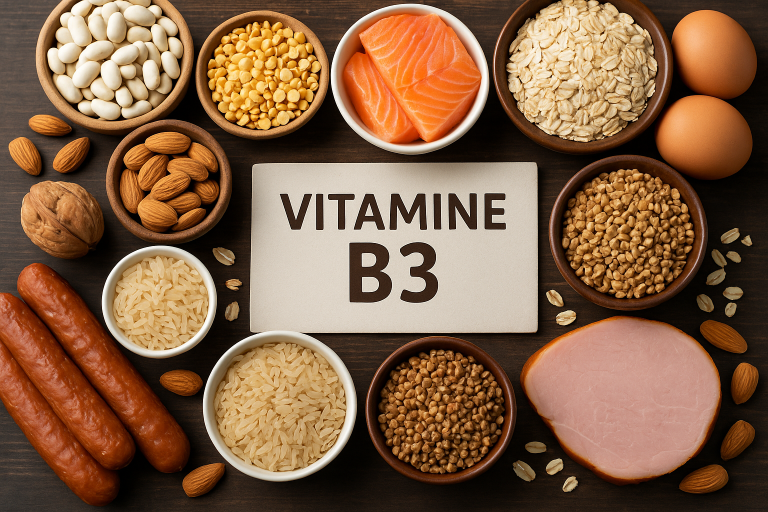
Niacin is found in:
- Meat and fish
- Eggs
- Whole grain cereal products
- Fruit and vegetables
- Potatoes
In addition, the body can make its own niacin from the amino acid tryptophan, which is found in all proteins. Tryptophan is also the precursor of dopamine (happiness hormone) and serotonin (sleep hormone).
Functions of niacin
Vitamin B3 performs several important tasks:
- Releasing energy from food
- Generation of fatty acids
- Creation of hormones
How much do you need per day?
The recommended amount depends on the energy (calories) you take in:
- Men: 15-19 mg per day
- Women: 12-14 mg per day
- Adjusted values apply to children and pregnant women
Deficiency of niacin
Deficiency can lead to pellagra, with symptoms such as:
- Skin disorders
- Diarrhea
- Dementia
In Western Europe, deficiency is very rare. In areas where corn is the staple food, it may be more common because corn contains a poorly absorbable form of niacin as well as little tryptophan.
Too much niacin
- High-dose supplements containing nicotinic acid can cause vasodilation and hot flashes.
- Nicotinamide does not produce this effect, but in very large amounts it can cause liver and eye damage.
Acceptable upper limit
Age → Nicotinic acid (mg) | Nicotinamide (mg)
- 1-3 years → 2 | 150
- 4-6 years → 3 | 220
- 7-10 years → 4 | 350
- 11-14 years → 6 | 500
- 15-17 years → 8 | 700
- 18 years and older → 10 | 900
Vitamin B3 and the soul ✨
Niacin symbolizes life energy, flow and harmony. It supports the solar plexus chakra, where strength, vitality and willpower come together. Because tryptophan is involved in the production of dopamine and serotonin, B3 also touches our emotional balance: joy, relaxation and good sleep. So Vitamin B3 not only helps your body gain energy, but also your soul gain peace, stability and inner strength.


 English
  Dutch
Dutch