Vitamin A
Vitamin A is a fat-soluble vitamin of great importance to both body and soul. It supports growth, healthy skin, hair and nails, and helps us not only with seeing in the dark but also with inner vision.
Key features
Vitamin A performs multiple tasks in the body, such as:
- Supports eyes and vision (including twilight vision).
- Contributes to a strong immune system.
- Important for skin, hair, gums and mucous membranes.
- Plays a role in growth and development (including during pregnancy).
- Helps maintain normal blood iron levels.
Forms and absorption of vitamin A
Vitamin A comes in different forms:
- Retinol and retinyl esters - from animal products (such as liver, dairy products, egg yolk and fish).
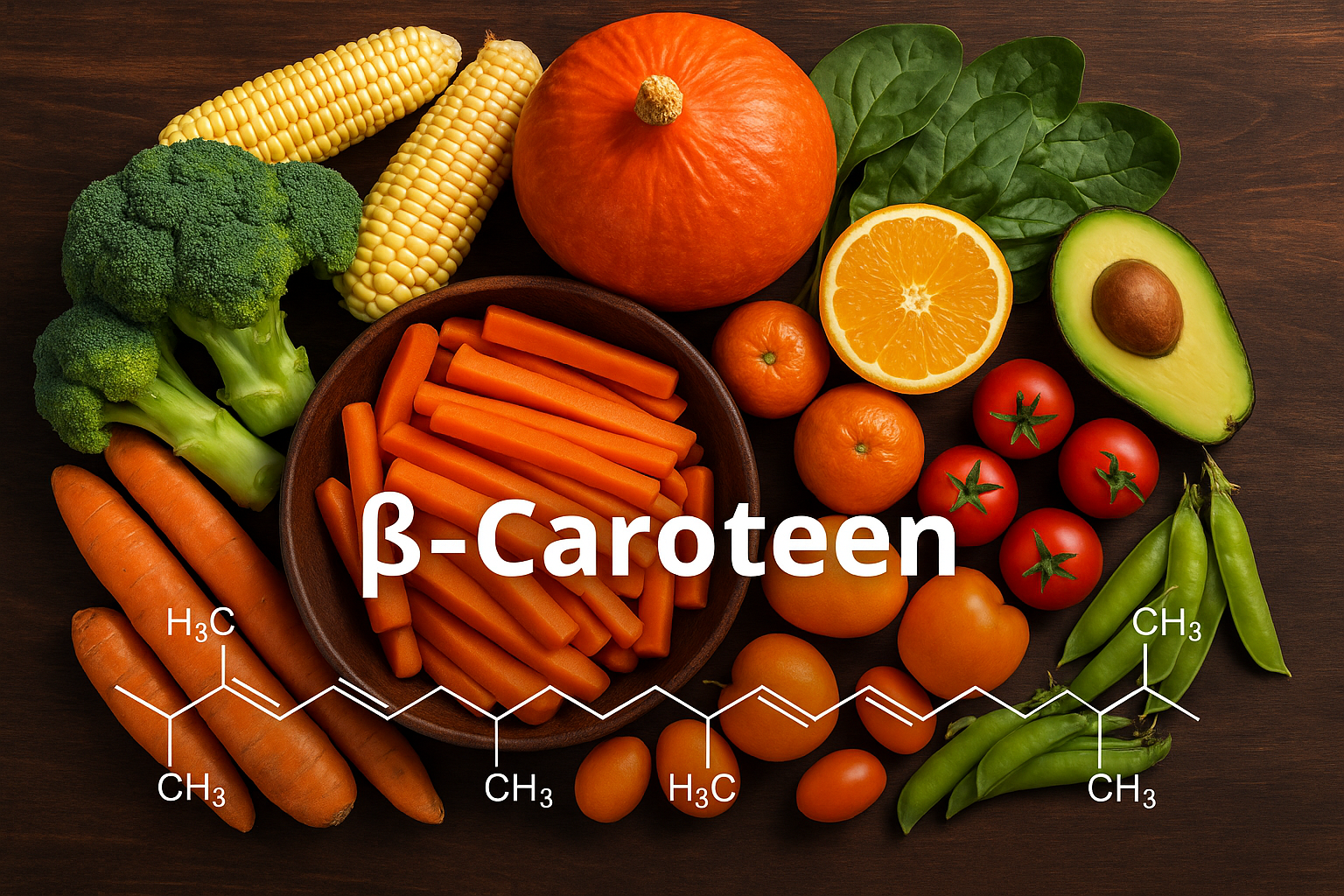
- Carotenoids (provitamin A) - from plant products (such as carrot, spinach, kale, endive). The body can convert these substances into active vitamin A.
- Supplements - often in the form of retinyl acetate, palmitate or beta-carotene.
The absorption of vitamin A requires fat. The body absorbs about 70-90% of retinol, and 9-22% of carotenoids. Storage occurs in the liver and partly in adipose tissue.
Too much vitamin A can be harmful to pregnant women and children.
What is vitamin A in?
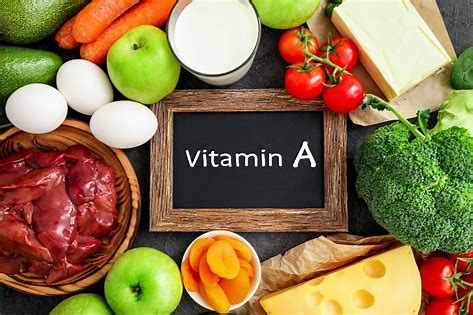
Vitamin A is found in both animal products and plant sources (provitamin A). The body can convert the latter to the active form.
- Animal: liver, dairy products, egg yolk, fish.
- Vegetable (provitamin A / beta-carotene): carrot, kale, spinach, endive.
- Fruit: tangerines, oranges (12 mcg beta-carotene = 1 mcg vitamin A).
Shortage and too much
Vitamin A deficiency can lead to:
- Skin problems, dull hair.
- Night vision or night blindness.
- Severe deficiency: blindness.
⚠️ Excess vitamin A can lead to:
- Headache, nausea, fatigue.
- Problems with eyes, skin and skeleton.
The upper limit for adults is set at 3,000 mcg per day.
Vitamin A and the soul ✨
Vitamin A is often called the ‘vitamin of sight. Just as it helps our eyes get used to the dark, symbolically it also helps us see inner light. It is connected to the Third Eye Chakra (Ajna), which represents intuition and wisdom, and the Solar Plexus Chakra, which nourishes our life force and vitality. Thus, vitamin A not only helps you stay physically healthy, but also supports your spiritual path.


 English
  Dutch
Dutch