What is selenium?
Selenium (also called selenium) is a trace element found in soil, water and food. The body needs very little of it, but this little is essential for good health.
The mineral plays a role in:
- the normal functioning of the immune system
- the production of thyroid hormones
- healthy fertility in men
There are two forms:
- Organic forms (such as selenomethionine and selenocysteine) → bound to amino acids and more absorbable.
- Inorganic forms (selenite and selenate) → often used in supplements, but less efficiently absorbed.
💡 Plants such as broccoli, garlic and onion contain mainly the organic forms of selenium.
Selenium and Glutathione
One of the most important functions of selenium is its cooperation with glutathione, a powerful antioxidant present in all body cells. Glutathione protects against free radicals and aids in detoxification in the liver. Without selenium, the body cannot produce enough glutathione.
Functions of selenium in the body
- Supports thyroid function
- Contributes to a good immune system
- Helps in normal energy metabolism
- Supports detoxification in the liver
- Plays a role in fertility and sperm quality
- Protects cells from oxidative stress
Selenium and resistance
Selenium strengthens the immune system. It is often combined with zinc in supplements for resistance and energy. This combination works synergistically and helps better protect your body from outside influences.
Selenium for skin and hair
Due to its strong antioxidant activity, selenium contributes to:
- Protection of the skin from UV damage
- Maintaining elastic skin
- Healthy hair and nails
Therefore, selenium is often added to supplements and products aimed at skin, hair and nails.
What is selenium in?
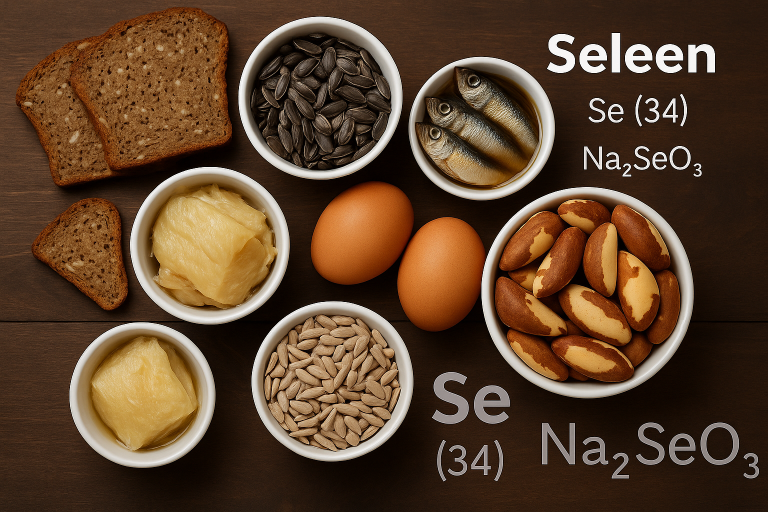
- Brazil nuts (the richest natural source)
- Fish, seafood and shellfish
- Vegetables such as broccoli and garlic
- Eggs and liver
- Whole grain cereals and bran
How much selenium do you need?
The recommended daily amounts are:
- Infants (6-11 months): 15 mcg
- Children (1-9 years): 20-30 mcg
- Teens (10-18 years): 40-60 mcg
- Adults: 70 mcg
👉 Therapeutically, this can go up to 100-200 mcg per day in certain conditions (including thyroid problems, impaired fertility or HIV/AIDS).
Deficiency of selenium
Severe deficiency is rare in the Netherlands, but low intake can cause health problems:
Possible complaints:
- Reduced resistance
- Muscle pain and weakness
- Fatigue
- Slow thyroid
- Heart problems with prolonged deficiency
The cause is often selenium-deficient farmland or prolonged use of parenteral nutrition without selenium.
Too much selenium
The safe upper limit is 300 mcg per day.
Excessive intake (especially through supplements) can lead to:
- Brittle nails and hair (loss in chronic excess)
- Skin damage
- Nervous system complaints
Spiritual significance of selenium ✨
In the spiritual tradition, selenium is seen as a mineral that supports inner purification. It helps clear blockages and promotes balance in the body and mind. Selenium is often associated with:
- The throat chakra (5th chakra) - communication, expression and truth.
- Protection from negative influences - as an antioxidant energetically translated to protection of your aura.
- Clarity and energy - selenium is sometimes used in meditation and healing to illuminate consciousness.

 English
  Dutch
Dutch