What is copper?
Copper is a trace element: a mineral of which our body needs only a very small amount. Yet it is indispensable for our health. The body cannot produce copper itself, so we are completely dependent on food.
Copper does not provide energy, but it supports numerous processes. It helps in the formation of red blood cells, supports the functioning of enzymes and is involved in the pigmentation of skin and hair. Copper also contributes to a good resistance and to keeping connective tissue and cartilage supple.
What forms of copper exist?
Not all copper supplements are absorbed equally well. From high to low absorption, these are the most common forms:
- Copper bisglycinate
- Copper citrate
- Copper picolinate
- Copper aspartate
- Copper oxide
What does copper do in our bodies?
Copper interacts with other minerals, especially iron and zinc. It is needed for the production of hemoglobin, the transport of oxygen in the blood and for healthy energy balance.
In addition, copper plays a role in thyroid function, nerve development, the immune system, maintaining healthy skin and hair pigmentation. Copper deficiency can even cause iron to be improperly absorbed, leading to anemia.
What is copper in?
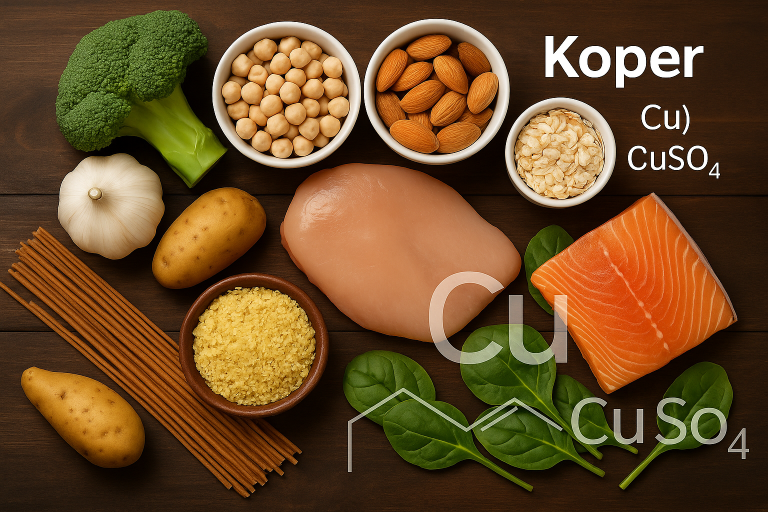
Copper is found in many foods. Rich sources include organ meats (such as liver), seafood (such as oysters), legumes, nuts and seeds (including cashews, hazelnuts, sunflower seeds and sesame seeds) and cocoa products such as dark chocolate.
Vegetables, fruits and whole grains also contain copper, but often in smaller amounts. In a healthy and varied diet, you normally get enough copper.
Copper deficiency
Deficiency is almost unheard of in the Netherlands, but can occur through long-term malnutrition, or through impaired absorption when high levels of iron, zinc or vitamin C are ingested.
Symptoms of deficiency include: fatigue and muscle weakness, digestive problems, iron deficiency anemia, impaired brain function, osteoporosis and reduced skin pigmentation.
Too much copper
Excess copper is rare, but can occur from supplements or copper stacking in hereditary conditions. Excessive levels can be harmful to the brain and nervous system.
The safe upper limit for adults is around 3 to 5 mg per day. With a healthy diet, there is rarely cause for concern, but supplementation should always be done with caution.
Spiritual meaning of copper
In spiritual traditions, copper is considered a conductor of energy. It is said to enhance the flow of life energy (chi or prana) and bring harmony between body and mind. Copper is often used in jewelry or healing tools because it is said to support the connection to the earth and helps discharge tension.
Conclusion
Copper is a small mineral with great significance. It supports our energy, blood production and resistance, and plays a role in both physical health and spiritual balance. With a varied diet, you normally get enough, but be aware of how it interacts with other minerals such as iron and zinc.

 English
  Dutch
Dutch