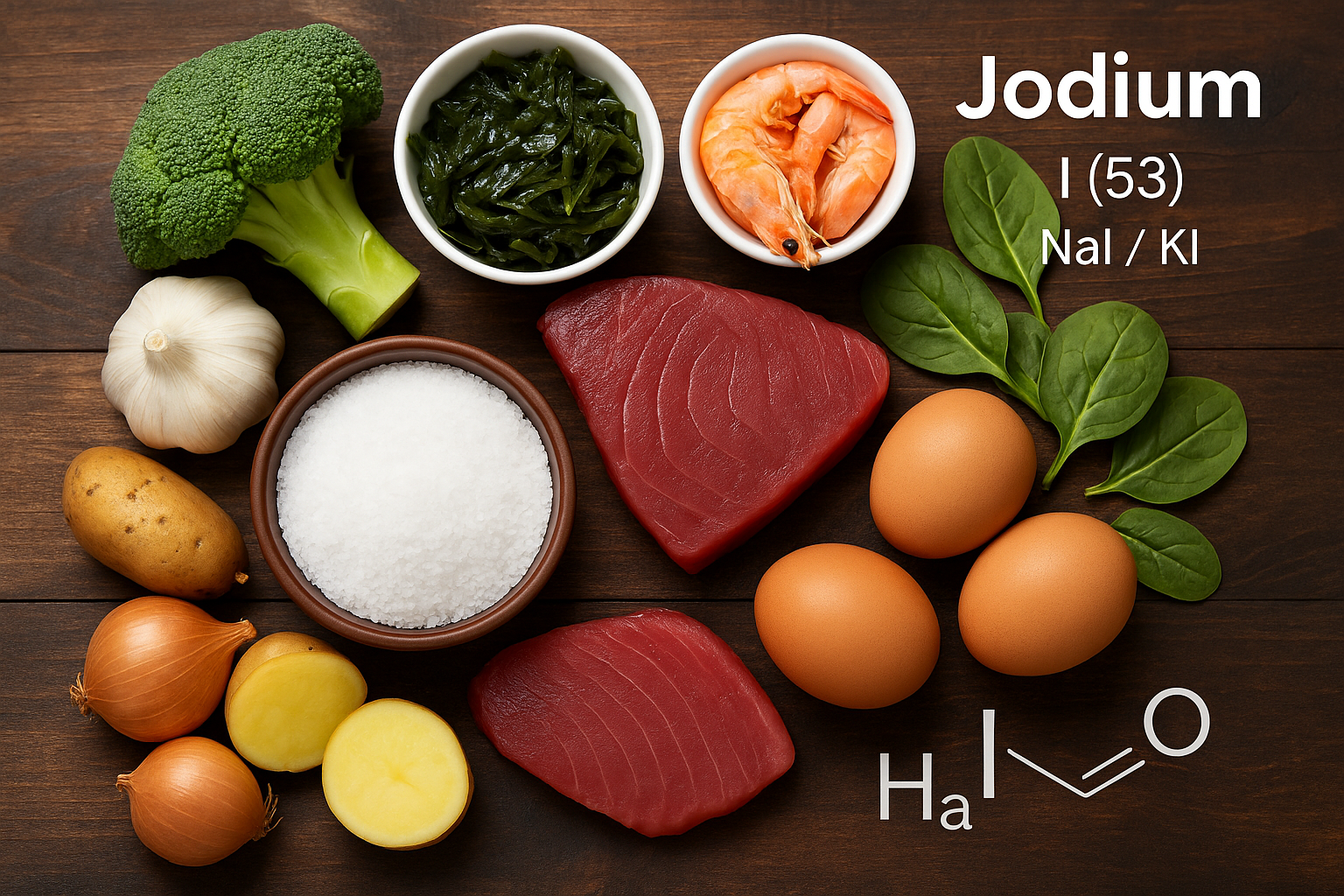
Iodine: 7 powerful benefits for energy and thyroid function
What is iodine? Iodine is a trace element found in our bodies only in small amounts, but it is indispensable. It supports the production of thyroid hormones, which provide: a...
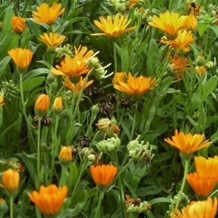
Marigold is an annual plant with mostly orange but sometimes yellow flowers and a thin taproot and hairy stem. The plant grows between 30 and 70 cm tall and blooms from May until the first night frost. In mild winters, blooming flowers are still found in January. The fruits are usually curved and boat-shaped.
One of the historical nicknames of the marigold is ‘sun-follower,’ a name that refers to the fact that the flowers always face the sun, closing when the sun disappears behind the clouds. The flower buds open at sunrise and close again at sunset.
Because the marigold is an annual, it is best planted in spring. The plant has few requirements; a nutritious soil and plenty of sunlight. Make sure the soil does not get bone dry and remove spent flowers to ensure a long flowering period.
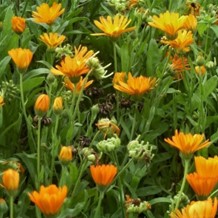
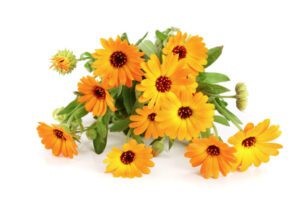
If you want to take advantage of the softening and nurturing properties of marigold for your homemade creams, oils and ointments, it is best to harvest the flowers when they are just open, on a dry, sunny day. The flowers are then fully open AND there is not too much moisture in them. The same goes for harvesting buds for capers or fresh flowers for in your salad or ice cream.
If you want to use the herb for homemade products, keep in mind that a deep, orange flower color is a sign of a lot of carotenoids (one of its many constituents), and that since you mainly need the ribbon leaves, the double-flowered varieties are very attractive. By the way, all the aboveground parts have healing properties to a greater or lesser extent.
Fresh or dried flowers can be used in soups. The flowers can also be used as coloring for cheese, butter and other foods. In the past, the petals were used for adulteration of saffron.
The marigold is edible and has a mild flavor. You can therefore use it to give your salads or ice cream sundaes a summery and colorful accent. You can also make capers from the flower buds.
The addition of the species name ‘officinalis’ in the botanical name indicates that this cheerful flower has also long been traditionally recognized as a medicinal herb within Europe. You too are probably familiar with the caring creams and ointments with ‘calendula’ in the product name.
The young leaves and flowers are edible and beneficial for bile and liver. Ointment and tincture are also made from the plant. These have the property of being wound astringent, skin restorative and disinfectant. The flower petals contain essential oil, which is widely used in ointments.
The bitter substances act on digestion. The essential oil calendin (or fragrance) has a disinfectant effect, but is very expensive to extract in pure form. The carotenoids are in the orange color of the flower (provitamin A). The resin, gum and mucilage - or sticky - is especially good for wound healing, as is the content compound xantophyll. The flavonoids work on blood vessels, the salicylic acid is again analgesic and anti-inflammatory, and then we have the coumarin which is mildly anesthetic and analgesic. All in all, working very well on the skin.
The fruits are also oily. Marigold oil extracted from the fruits can be used as a binder in paints and varnishes. After processing, marigold oil is also suitable as a paint thinner to replace other harmful thinners.
The flower for the skin is a very soothing antibacterial and antiviral agent. It promotes skin repair and ensures beautiful healing of wounds. Moreover, it helps against pain and itching in skin problems. Internally, the flower has a soothing effect on digestion.
Marigolds contain numerous healthy constituents: Vitamin A and C; calcium, silicon, sulfur and acetylsalicylic acid (works to relieve pain and fever) carotenoids, flavonoids and essential oils.
© All rights reserved | With ♡ created by Webaware Websites
Disclaimer | General conditions | Privacy Statement |
 English
  Dutch
Dutch