What is phosphorus and phosphate?
Phosphorus is a mineral found in our bodies mainly in the form of phosphate compounds. These are compounds of phosphorus (P) with oxygen (O). About 75% of the phosphate in the body is found in the bones and teeth, mainly as calcium phosphate.
Phosphorus is essential for:
- energy management (ATP)
- the functioning of muscles and nerves
- the production and strength of bones and teeth
- maintaining the proper acidity (pH) of the blood
Why is phosphorus so important?
Phosphorus is part of the cellular material of all living things. It plays a key role in:
- energy transfer between cells
- growth and development
- reproduction
🌱 Did you know?
Not only humans and animals, but also plants are completely dependent on phosphorus. For our food production, it is an important ingredient in fertilizers and animal feed. However, the world's supply of phosphorus is finite, and excessive use leads to environmental pollution (leaching of phosphate into soil and water).
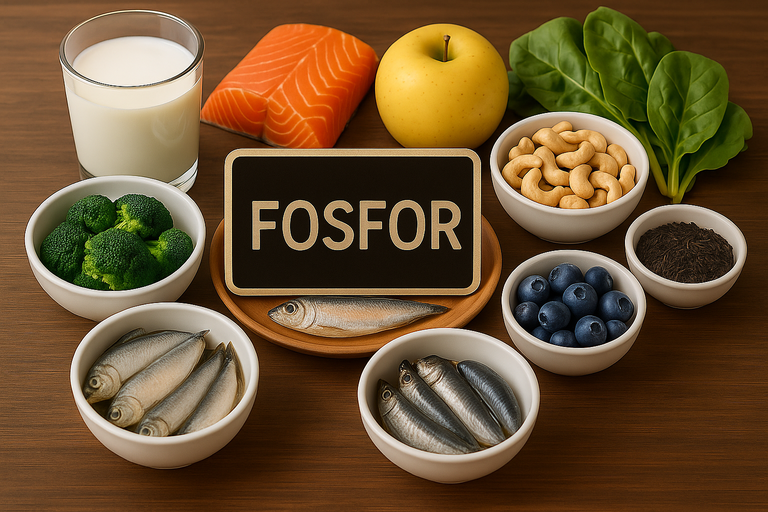
What is phosphorus (phosphate) in?
Phosphorus occurs in food as phosphate.
Foods high in phosphate:
- milk and milk products
- cheese and cheese spread
- meat, chicken and fish
- eggs
- Legumes (brown/white beans, lentils, capuchins)
- nuts and peanuts
- chocolate
Low phosphate foods:
- vegetables
- fruit
- butter and oil
- sugar and candy
Deficiency of phosphorus
Phosphorus deficiency is rare because this mineral is found in many foods. Nevertheless, it can occur in:
- long-term use of antacids
- certain conditions or deficiencies
Symptoms of phosphorus deficiency:
- aching bones and muscles
- Fused bones in growing children
When is supplementation useful?
For most people, additional phosphorus is not necessary. Only in specific cases, such as long-term use of antacids, can a supplement be considered. This should always be done in consultation with a physician.
Spiritual meaning of phosphorus ✨
Spiritually, phosphorus is seen as the mineral that symbolizes light and energy. It stands for:
- inner fire and life energy
- growth and transformation
- connection between body and soul
Phosphorus is sometimes associated with the solar plexus chakra (manipura), which symbolizes strength, energy and balance.
🌿 Healthy foods and herbs | Phosphorus
 English
  Dutch
Dutch